
If you're researching Botox in Christchurch, you've probably noticed that most of what you find is either marketing or the kind of vague reassurance that doesn't help you make a decision. Prices are hidden. Claims are sweeping. Nobody explains what actually happens at the appointment, or who is legally allowed to hold the syringe.
This article is my attempt to fix that. I'm a cosmetic doctor in Christchurch, and I teach botulinum toxin and dermal filler technique to other doctors and nurses. That teaching work is why I care about the questions below — I see, from the inside, how much variation there is in how this treatment is delivered.
Here's what I think you should know before you book anywhere.
What Botox® actually is
Botox® is a brand name. The medicine itself is botulinum toxin type A, a purified protein produced by Clostridium botulinum. Several brands of botulinum toxin type A are available in New Zealand, and they behave slightly differently from each other in ways that matter more to your injector than to you.
When a very small, precisely placed dose is injected into a facial muscle, it temporarily reduces that muscle's ability to contract by blocking the nerve signal that tells it to fire. Less contraction means the skin above the muscle creases less. Over time, lines that only appeared with movement become less pronounced at rest.
Two points that get lost in most marketing copy:
It is a prescription medicine. In New Zealand, botulinum toxin cannot be sold or supplied without a prescription. That means a doctor or nurse prescriber must assess you and prescribe it before any treatment happens. This is not a formality that can be handled with a form. If a clinic offers you an injection without a proper medical consultation, that's a meaningful red flag.
It is temporary. The effect wears off as the nerve endings recover. This is a maintenance treatment, not a permanent change.
What it's approved to treat
In New Zealand, Botox® is an approved prescription medicine for the treatment of frown lines, horizontal forehead lines, and crow's feet around the eyes.
There are other, non-cosmetic conditions for which botulinum toxin is used in medical practice. If you have a medical concern rather than a cosmetic one, that's a conversation to have with your GP or specialist, not something to select from a clinic's treatment menu.
You'll see clinics advertising a wide range of other facial uses. I'd encourage a degree of caution there. Some of those uses have reasonable clinical evidence behind them; some don't. Either way, the appropriate place to discuss whether something is suitable for you is in a consultation with the prescriber, where your anatomy, your medical history and your goals can actually be assessed.
What happens at the appointment
A well-run appointment looks roughly like this.
Consultation and assessment. We talk about what's bothering you and what you're hoping for. I look at how your face moves — not just how it sits at rest. Muscle strength and movement patterns vary enormously between people, and they're the main thing that determines where and how much to inject.
Medical history. Existing conditions, medications, allergies, previous treatments, pregnancy or breastfeeding. Some of these are absolute reasons not to proceed.
Prescription and consent. If treatment is appropriate, it's prescribed for you specifically. You should be told the realistic outcome, the risks, and what it will cost before anything is injected.
Treatment. The injections themselves take a few minutes. Most people describe a brief sting. No anaesthetic is usually required.
Review. A follow-up appointment two weeks later, once the full effect has developed, so the result can be assessed and recorded for next time.
If any of these steps is missing, ask why.
When you'll see results, and how long they last
You may start to notice a change within three to seven days. The full effect develops at around two weeks — which is why the review appointment sits where it does.
Botox® treatment lasts about four months, and further courses of treatment may be necessary.
That number is an average, not a promise. Muscle strength, dose, treatment area and individual metabolism all shift it. Some people are consistently at the shorter end. Knowing which you are takes a couple of cycles.
Risks and side effects
Every medicine carries risk, and a clinic that tells you otherwise is telling you something they can't know.
The common effects are minor and short-lived: small bumps at the injection sites that settle within an hour or two, redness, and occasional bruising. Headache in the day or two afterwards is reported by some people.
Less commonly, the medicine can affect a muscle that wasn't the target. In the upper face, that can mean a temporarily heavy brow or an eyelid that sits lower than usual. It resolves as the effect wears off, but "temporary" can still mean several weeks — which is why placement and dosing matter so much, and why who injects you matters more than which brand they use.
Anyone experiencing side effects after treatment should see their doctor.
Who is allowed to inject in New Zealand

This is the part I most want people to understand, because the regulatory picture is more permissive than most patients assume.
Because botulinum toxin is a prescription medicine, it must be prescribed by a doctor or a nurse prescriber. A registered nurse can administer it under that prescription.
What surprises people is what isn't required. There is no mandatory, standardised qualification in cosmetic medicine that every injector in New Zealand must hold. Doctors can pursue formal postgraduate qualifications in aesthetic medicine — a multi-year pathway with coursework and examinations — but doing so is a choice, not a legal requirement. For nurses, training is typically assembled from individual courses and workshops, with no single standardised credential. In some models, a supervising doctor may be located in another city entirely.
None of this means a nurse injector is less skilled than a doctor. Plenty are excellent, and experience counts for a great deal. But it does mean the label "qualified injector" carries very different weight depending on who's using it, and that the responsibility for asking sits with you.
Questions worth asking any Christchurch clinic
- Who will prescribe my treatment, and will they be on site?
- What specific qualification does my injector hold, and how long have they been injecting?
- How many treatments in this area do you perform in a typical month?
- What happens if I'm not happy with the result, and is a review appointment included?
- What is the total cost, including consultation?
- If something goes wrong, who do I contact and how quickly?
A clinic that answers these easily is a clinic that's used to being asked.
What Botox costs in Christchurch
Pricing in Christchurch is usually structured one of two ways: per unit of medicine, or as a flat price per treatment area. Neither is inherently better, but they're hard to compare, so ask which model a clinic uses before you compare quotes.
What actually drives your cost is the dose you need, and that depends on your muscle strength. Someone with a strong frown muscle may need substantially more than someone with a subtle one, for the same visible outcome. A quoted "from" price is a starting point, not an estimate for you.
One thing to be wary of: in New Zealand it is not permitted to advertise discounts on prescription medicines. If you see a clinic promoting a percentage off a botulinum toxin treatment, or running limited-time pricing on it, they're operating outside the rules. Whether that concerns you is your call, but it tells you something about how carefully they work.
Before and after your treatment
Beforehand: avoid alcohol for 24 hours. If you take aspirin, fish oils or anti-inflammatory medication and it's medically safe to pause them, doing so for a few days can reduce bruising — but never stop prescribed medication without checking with your doctor first. Come with clean skin; makeup is fine and can be removed at the clinic.
Afterwards: stay upright for four hours. Avoid saunas, hot rooms and vigorous exercise for the rest of the day. Don't rub or massage the treated area for 24 hours. A cold compress helps if you bruise.
Then be patient. Judging the result at day four is the most common mistake people make.
What a realistic result looks like
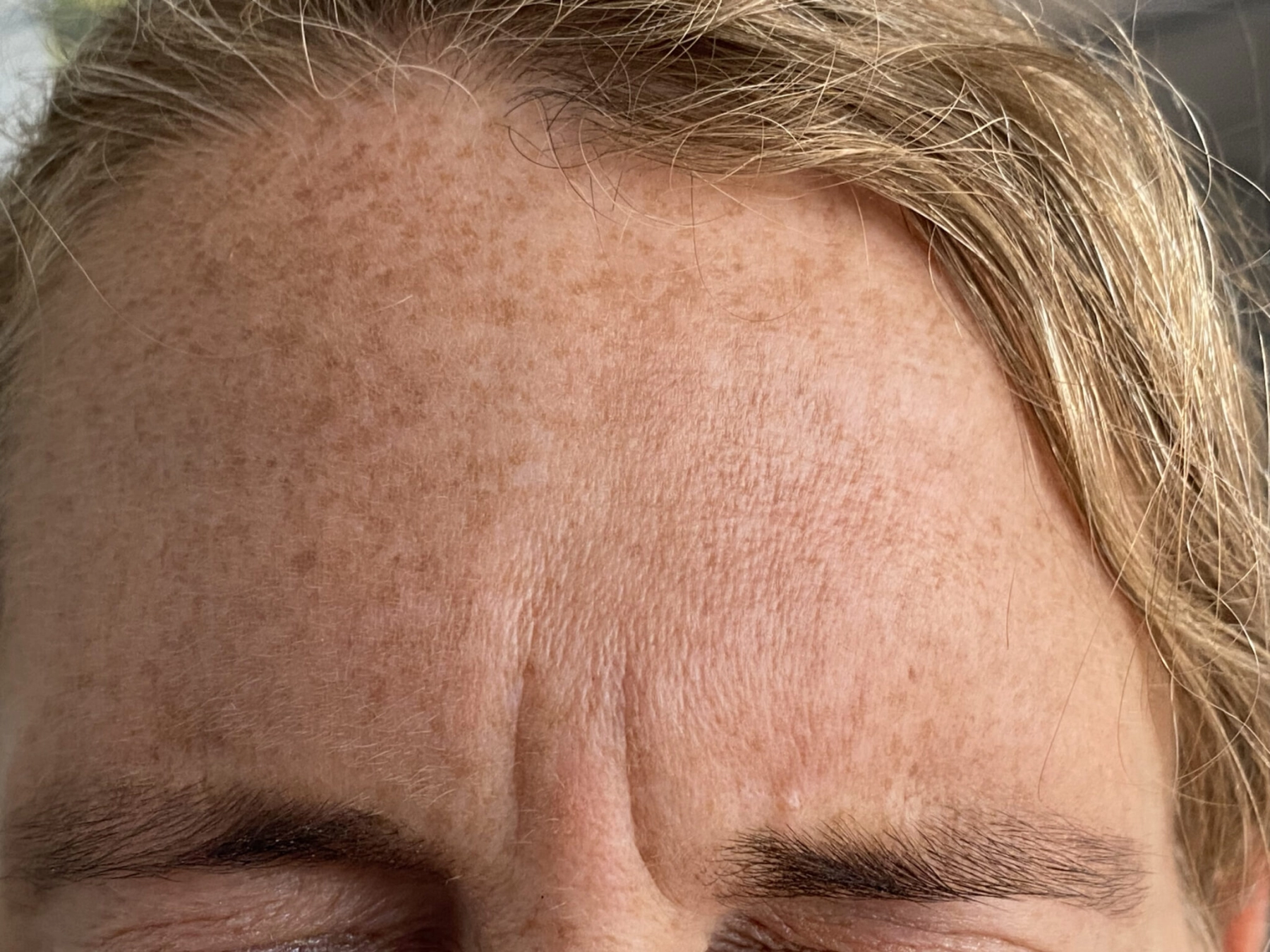
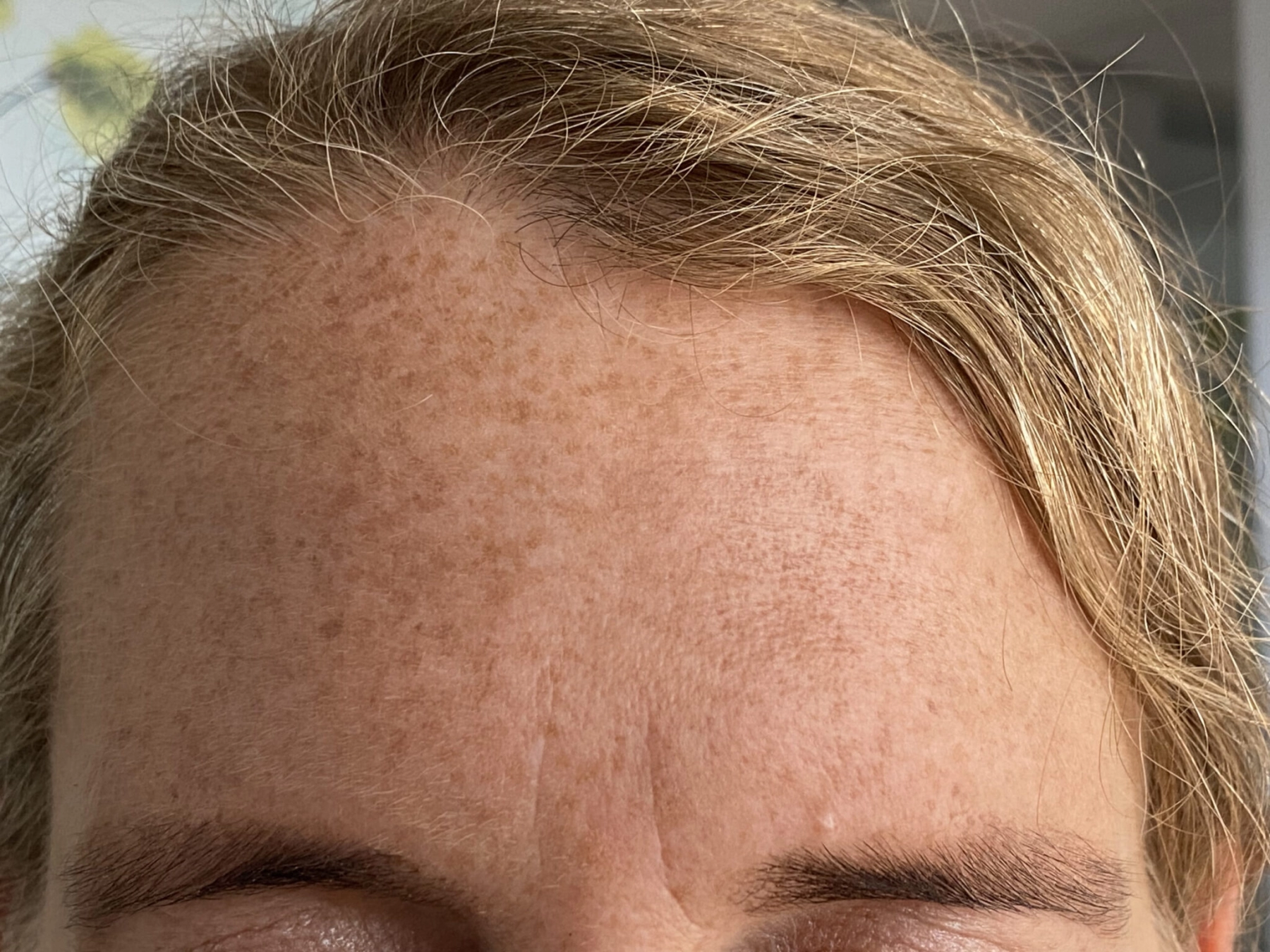
Photographs are more useful than adjectives, so here is a treated patient before and after, photographed under matched lighting and framing, with no retouching or filters applied.
Notice what hasn't changed. The face still moves. The expression is still hers. That is the outcome most people are actually asking for when they say they want to look less tired, and it's a very different thing from the frozen look that puts people off booking in the first place.
Frown lines
 Before
 After
After
Before, and approximately two weeks after, treatment at Satini Cosmetic Clinic, Christchurch. Photographed under matched lighting, framing and camera angle. Unretouched, with no filters applied. Published with the patient's written consent. Individual results may vary.
Frequently asked questions
How long does Botox last?
Botox® treatment lasts about four months, and further courses of treatment may be necessary. Individual results vary with dose, muscle strength and treatment area.
When will I see results?
Some change is often noticeable within three to seven days, with the full effect developing at around two weeks.
Does it hurt?
Most people describe a brief sting at each injection point. The treatment takes a few minutes and anaesthetic isn't usually needed.
Is there any downtime?
Most people return to normal activities immediately. Small bumps at the injection sites usually settle within an hour or two, and some people bruise.
Will my face look frozen?
That depends entirely on dose and placement, which is why the assessment matters. A conservative approach that preserves expression is possible, and it's what most people ask for. Discuss your preference explicitly at consultation.
Do I need a consultation first?
Yes. Botulinum toxin is a prescription medicine and must be prescribed following a medical assessment.
Can I have treatment while pregnant or breastfeeding?
This should be discussed with your doctor. It's one of the reasons a full medical history is taken before treatment.
How do I know if an injector is properly qualified?
Ask directly what qualification they hold, who prescribes, and how long they've been injecting. There's no single mandatory credential in New Zealand, so the specifics matter.
Talk to a doctor about it
At Satini Cosmetic Clinic in Ferrymead, treatments are performed by a doctor, and every appointment begins with a proper consultation and assessment. If you'd like to discuss whether treatment is appropriate for you, you're welcome to book an initial skin assessment.
Satini Cosmetic Clinic
1/27 Waterman Place, Ferrymead, Christchurch 8023
0800 121 622 ·
enquiry@satini.co.nz
Botox® is a prescription medicine for the treatment of frown lines, horizontal forehead lines and crow's feet around the eyes. Botox® has risks and benefits. Ask your doctor if Botox® is right for you. If you have side effects, see your doctor. You will need to pay for Botox® and clinic fees will apply. For details on precautions and side effects consult your healthcare professional or the Consumer Medicine Information (CMI) at www.medsafe.govt.nz. Botox® treatment lasts about 4 months and further courses of treatment may be necessary. Should only be administered by trained medical professionals. (Contains botulinum toxin A 50, 100 and 200 units.) Allergan (NZ) Limited, Auckland.
Relfydess® is an unfunded medicine for aesthetic indications. Product and treatment costs apply. Relfydess® is a prescription medicine containing 150 units of relabotulinumtoxinA for the treatment of frown lines and crow's feet around the eyes. Relfydess® has risks and benefits. Ask your healthcare professional if Relfydess® is right for you and to explain the possible side effects. Tell them if any side effects concern you. Always follow the instructions you are given. For details on precautions and side effects, see the Consumer Medicine Information at www.medsafe.govt.nz. Galderma Australia Pty Ltd. Galderma is a registered trademark of Galderma Holding S.A. Distributed in New Zealand by Healthcare Logistics.