
Calf Slimming with Botox: A Christchurch Doctor’s Guide to Calf Reduction Injections
An educational guide from Satini Cosmetic Clinic, Christchurch
Bulky, over-developed calves are one of the few areas of the body that respond poorly to diet and exercise. For people whose lower legs look muscular rather than fatty, working out often makes the problem worse, not better. This is where calf slimming with botulinum toxin — commonly known by the brand name Botox — has become a genuinely useful, non-surgical option.
This guide explains how calf reduction with Botox works, who it suits, what results are realistic, and what to think about before booking a consultation with a qualified cosmetic doctor in Christchurch. It is written for information only, not as a treatment recommendation, and calf slimming is an off-label use of botulinum toxin in New Zealand (see the important note at the end).
What is calf slimming with Botox?
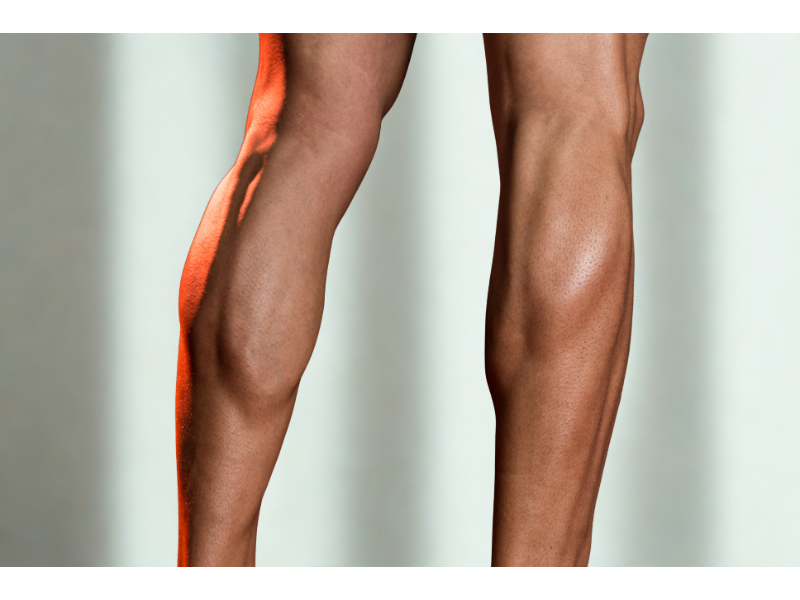
Calf slimming — sometimes called calf reduction, “calf tox” or lower-leg contouring — uses small, carefully placed injections of botulinum toxin to relax the largest, most superficial calf muscle. As that muscle relaxes and is used slightly less, it gradually loses some bulk, and the lower leg takes on a slimmer, smoother contour when viewed from behind.
It is important to understand what the treatment is not. It is not liposuction, it does not remove fat, and it is not surgery. There are no incisions, no general anaesthetic and essentially no downtime. It is a gradual, temporary muscle-slimming effect that softens the appearance of a heavily muscled calf over a period of weeks.
The anatomy: why the gastrocnemius matters
Your calf is made up of two main muscles: the gastrocnemius and the soleus. The gastrocnemius is the large, superficial muscle you can see and feel at the back of your lower leg — it is responsible for most of the visible bulk and the “diamond” definition that some people find too prominent. Sitting underneath it is the soleus, a deeper muscle that does a lot of the endurance work involved in standing and walking.
Calf reduction injections target only a portion of the outer fibres of the gastrocnemius. Because the treatment affects the superficial muscle and only partially, the deeper soleus and the surrounding muscles continue to do their job. That is the reason the treatment can slim the visible shape of the calf without taking away the strength you need for everyday movement.
Muscle or fat? The single most important question
Not every large calf is a candidate for this treatment, and an honest assessment here is what separates a good result from a disappointing one. Botulinum toxin only works on muscle bulk. If the fullness of your lower leg is mostly fat rather than muscle, injections will do very little, and other approaches would suit you better.
A simple in-clinic check helps sort this out: your calves are examined both relaxed and while you are up on your toes. When you rise onto tiptoe, a muscular calf will visibly firm and bulge — that firmness is the gastrocnemius, and it tells the doctor the bulk is muscular and likely to respond. If the leg stays soft, the fullness is more likely fat, and a different plan is needed. This is exactly why a proper consultation and physical examination, rather than an online booking for a set number of units, is so important.
How does calf Botox actually work?
Botulinum toxin works by temporarily interrupting the chemical signal between nerve and muscle. It blocks the release of acetylcholine, the neurotransmitter that tells a muscle to contract. With that signal dampened, the treated portion of the muscle contracts less forcefully. Over the following weeks, reduced activity leads to a controlled, partial reduction in muscle volume — a similar principle to the way botulinum toxin is used to slim an over-developed jaw muscle (the masseter).
The key words are temporary and partial. The nerve signalling gradually returns, the muscle recovers its previous activity, and the slimming effect fades. This is why calf slimming is a maintenance treatment rather than a one-off fix.
What to expect during the treatment
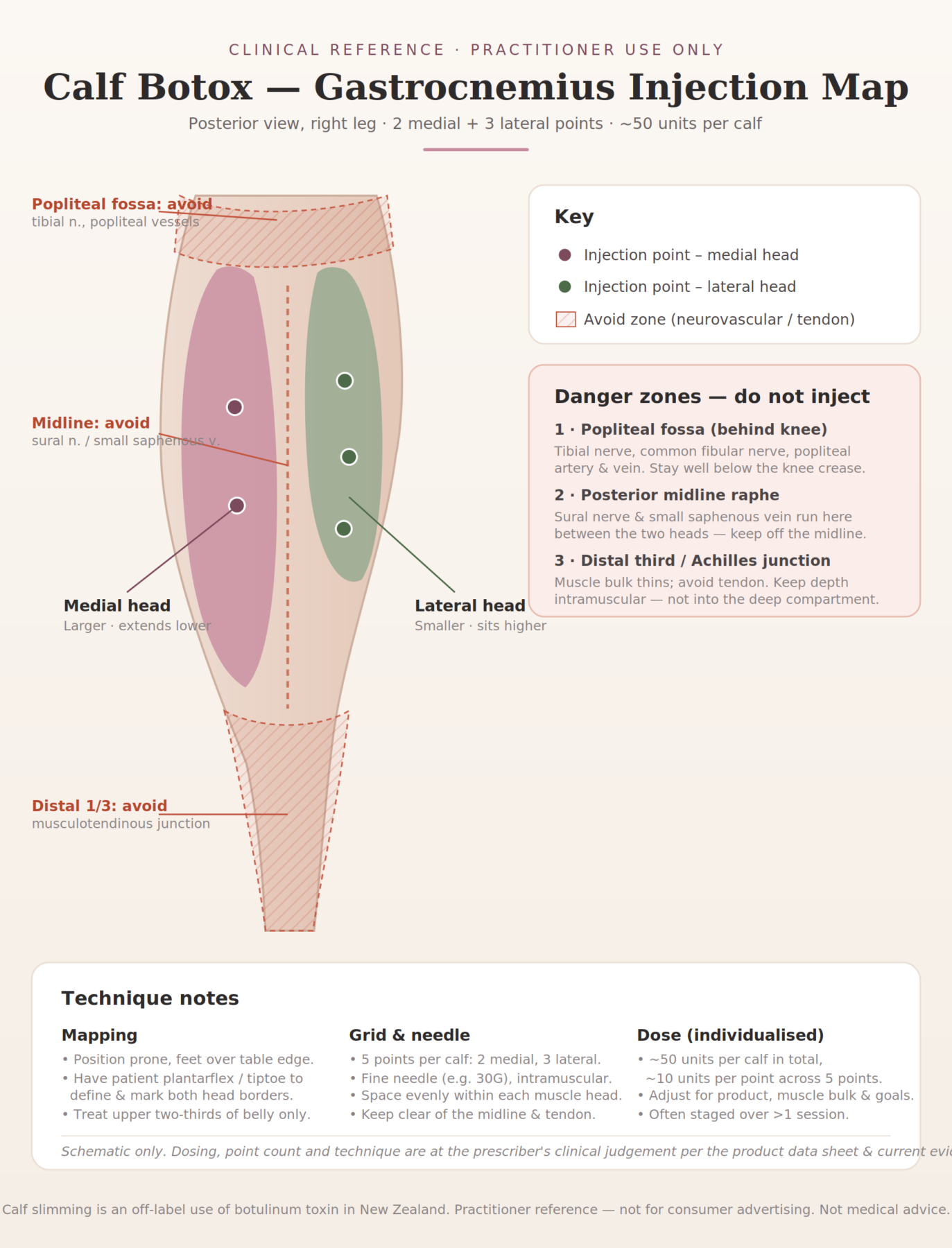
A calf slimming session is quick and done in the clinic. After the assessment described above, the treatment areas are mapped out across the gastrocnemius of each leg, sometimes using a grid to keep the injection points evenly spaced. A fine needle is used to place small amounts of product across the muscle.
Because the calf is a large, strong muscle, it requires considerably more product than a facial treatment — often in the region of 50 to 100 units per calf, and sometimes more, depending on your anatomy and goals. Many people need more than one session to reach a visible result, and the exact dose and plan should always be individualised by your prescriber rather than taken from a generic online figure. The appointment itself usually takes under an hour. Discomfort is generally mild and well tolerated, and most people walk out and drive home as normal.
Results timeline: patience required
Calf slimming is a slow-burn treatment, and setting realistic expectations is essential.
- First few days: Nothing visible yet. The muscle is only just beginning to respond.
- 2 to 4 weeks: The muscle activity has reduced and early softening of the shape may start to appear.
- 6 to 8 weeks and beyond: The more noticeable slimming develops as the treated muscle bulk reduces. Full results are often judged at around the two to three month mark.
- 4 to 6 months: The effect typically peaks and then gradually wears off as normal muscle function returns.
Because the change is gradual, calf reduction rewards patience and a maintenance mindset. Results are not permanent, and ongoing sessions are needed to keep the effect.
Is it safe? Side effects and considerations
When performed by a qualified, medically trained injector who understands lower-limb anatomy, calf slimming has a reasonable safety profile — but it is a genuine medical treatment with genuine risks, and it should never be treated casually.
Possible side effects include temporary muscle soreness, tenderness or bruising at the injection sites, a feeling of tiredness or weakness in the calves, and occasionally muscle cramping, especially early on. Because the treatment reduces muscle strength, some people notice their calves feel less powerful for a period — which matters a great deal if you are an athlete or very physically active (see below). As with any injection, there is a small risk of infection, and botulinum toxin is not suitable during pregnancy or breastfeeding, or for people with certain neuromuscular conditions.
This is not a treatment to shop for on price or convenience. The dose is high, the muscle is functionally important, and the anatomy is unforgiving of poor technique. Who injects you matters more here than almost anywhere else.
Will it affect my walking, running or sport?
This is the most common and most important question, and the honest answer is: it can, and it depends on the dose and on you. Because only part of the superficial muscle is treated and the deeper muscles are left to work, most people continue to walk, stand and go about daily life normally. However, calf muscles are heavily involved in explosive and endurance activities — sprinting, jumping, distance running, dancing, hiking. Competitive athletes and people who train hard should discuss this frankly with their doctor before proceeding, because a reduction in calf power, even a modest one, can affect performance. For a sedentary or lightly active person seeking a cosmetic change, the functional impact is usually minimal.
Calf Botox versus surgery and other options
Historically, reducing bulky calves meant surgery — procedures such as partial muscle resection (myectomy) or cutting the nerves that supply the muscle (neurectomy). These are invasive, carry meaningful risks and recovery, and are irreversible. Botulinum toxin emerged as a far less invasive alternative for suitable candidates, with no incisions and minimal downtime, at the trade-off of being temporary and needing maintenance.
If the calf fullness is fatty rather than muscular, liposuction may be more appropriate, and in some cases a combination approach is considered. The right option genuinely depends on the individual, which is why an in-person assessment beats any online generalisation.
Recovery and aftercare
One of the advantages of this treatment is how little it disrupts your life. Most people return to normal activities the same day. Typical aftercare advice includes staying upright and avoiding vigorous calf exercise for the first day or so, avoiding deep calf massage of the treated area immediately afterwards, and following the specific guidance your clinician gives you. Any bruising or tenderness usually settles within a few days. Your clinic will normally arrange a review to assess your response before considering any further sessions.
What does calf slimming cost?
Calf slimming can be one of the more costly botulinum toxin treatments, and it is worth going in with a realistic sense of the investment involved. Because the calf is a large, strong muscle, the doses are far higher than for a facial treatment — most people need at least 100 units in total, in the region of 50 units per calf, before they see a meaningful difference, and some need more depending on their muscle bulk. That higher unit requirement is the main reason the cost sits well above a typical anti-wrinkle appointment, staring at $1200 at Satini Cosmetic Clinic in Christchurch.
It is also important to understand that this is an ongoing commitment rather than a one-off. Results usually last around three to five months before the muscle gradually returns to its previous activity, so treatment needs to be repeated regularly to maintain the effect. The more encouraging news is that for some people the muscle responds progressively over a course of treatment, so maintenance sessions can become less frequent over time. Rather than isolating a price for the medicine itself, a reputable clinic will give you a tailored plan after your consultation that reflects your anatomy, the dose required and how many sessions you are likely to need.
Thinking about calf slimming in Christchurch?
Calf reduction with botulinum toxin is not a decision to rush. The most important factors in a good outcome are an honest assessment of whether your calves are muscular or fatty, realistic expectations about a gradual and temporary result, and — above all — being treated by a qualified, medically trained injector who understands lower-limb anatomy. If you are considering it, the sensible first step is a consultation and physical examination so a doctor can tell you whether you are a suitable candidate and what a realistic plan looks like for you.