Satini For Men — Hair Loss
Types of Hair Loss in Men, Explained
Not all hair loss is the same condition — and knowing which type you're dealing with matters, because the right treatment for one type can do nothing for another. Broadly, hair loss in men falls into three categories: pattern hair loss, diffuse thinning, and patchy hair loss. Here's how to tell them apart.
Pattern Hair Loss (Male Pattern Baldness)
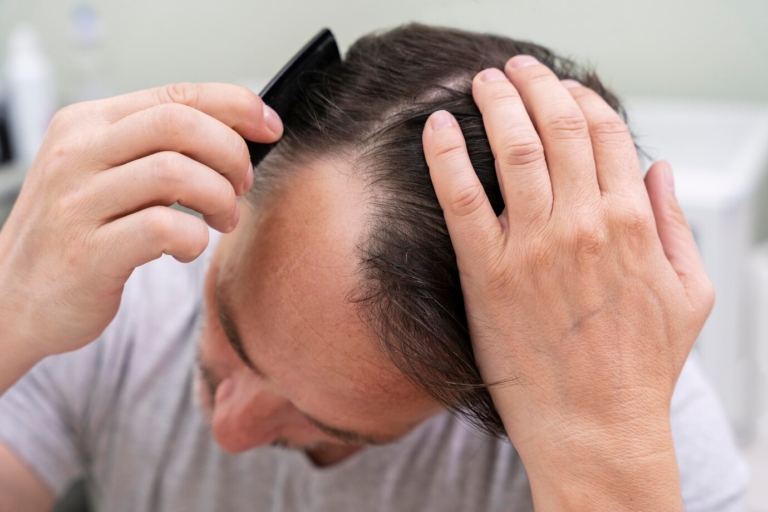
This is by far the most common type of hair loss in men, and it's genetic — driven by DHT gradually shrinking follicles that are hereditarily sensitive to it. It follows a recognisable pattern, usually starting at the temples or crown, and gets gradually more pronounced over years rather than appearing suddenly.
If your hair loss looks like this — a receding hairline, thinning crown, or both — you're almost certainly dealing with androgenetic alopecia, and it's worth reading our full breakdown of male pattern baldness treatment, including the Norwood scale, causes, and treatment options like topical finasteride, minoxidil and PRP.
Diffuse Hair Loss (Thinning All Over)
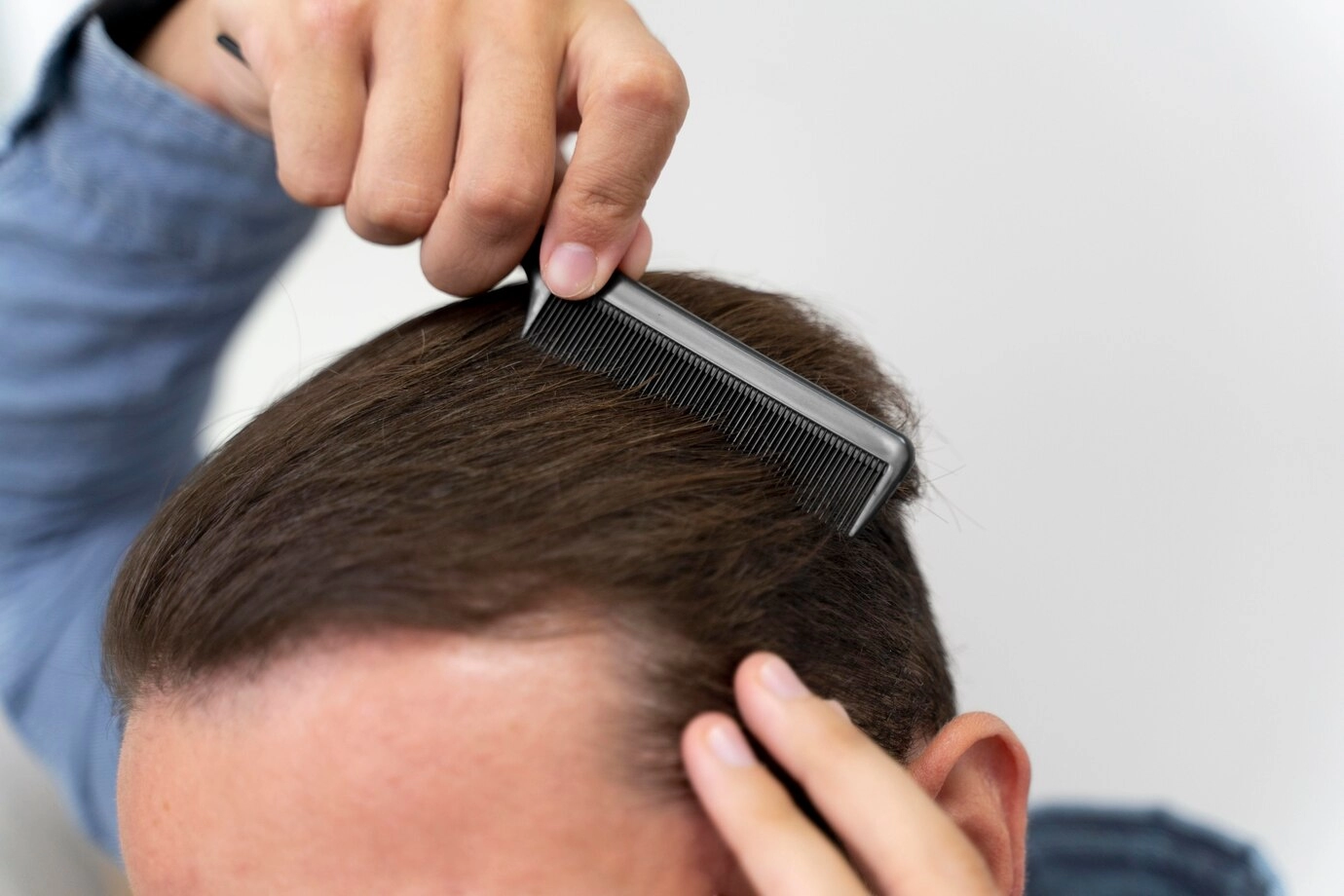
Unlike pattern hair loss, diffuse thinning affects the whole scalp fairly evenly rather than following the temple-and-crown pattern. It's usually a sign that something else is going on:
- Stress — a significant physical or emotional stressor can push hair follicles into a shedding phase, typically noticed two to three months after the event.
- Poor nutrition — crash dieting, restrictive eating, or deficiencies in iron, zinc, vitamin D or protein can all show up as hair thinning.
- Medications — some medicines list hair thinning as a side effect; if you've started something new around when the thinning began, it's worth mentioning to your doctor.
- Medical conditions — thyroid disorders (both underactive and overactive), autoimmune conditions and other underlying illness can all cause diffuse shedding.
Because diffuse thinning has causes so different from genetic pattern loss, it needs a different assessment — not a finasteride prescription. We cover this in more depth, including in women, on our hair loss and thinning page.
Patchy Hair Loss
Patchy hair loss — distinct, often coin-sized bald patches rather than gradual thinning — is most commonly caused by alopecia areata, an autoimmune condition where the immune system attacks hair follicles. It can appear suddenly and doesn't follow the pattern-baldness map. If you notice patchy loss rather than gradual recession or overall thinning, it's worth having this properly assessed rather than assuming it's the same thing as pattern baldness.


Treatment Options, by Type
Treatment only works when it's matched to the actual cause:
- Pattern hair loss responds to topical finasteride (which blocks DHT), minoxidil (which supports blood flow to the follicle), and PRP (which stimulates follicles directly) — usually most effective in combination, and covered in detail on the male pattern baldness treatment page.
- Diffuse thinning often resolves once the underlying cause (stress, nutrition, thyroid) is addressed, sometimes alongside minoxidil or laser/red-light devices to support regrowth in the meantime.
- Patchy hair loss needs a proper diagnosis and is generally managed differently from the two categories above.
Low-level laser/red-light devices, medical-grade scalp shampoos, and targeted supplements (like saw palmetto) can be useful supporting treatments across more than one of these categories — we stock a range of these in clinic, alongside the prescription options.
If your hair loss looks like a classic receding hairline or thinning crown, it's very likely male pattern baldness, and the most useful next step is understanding your options on our male pattern baldness treatment page. If it looks different — sudden, patchy, or spread evenly across your whole scalp — it's worth a proper assessment before trying anything, since guessing wastes both time and money on a treatment that was never going to work for what you actually have.
Book your $99 consultation
Refunded against any in-clinic treatment. Find out exactly what type of hair loss you're dealing with.
Book via our Male Pattern Baldness page →This article is general information and does not replace individual medical advice. Prescription treatments mentioned here require a doctor's assessment.