
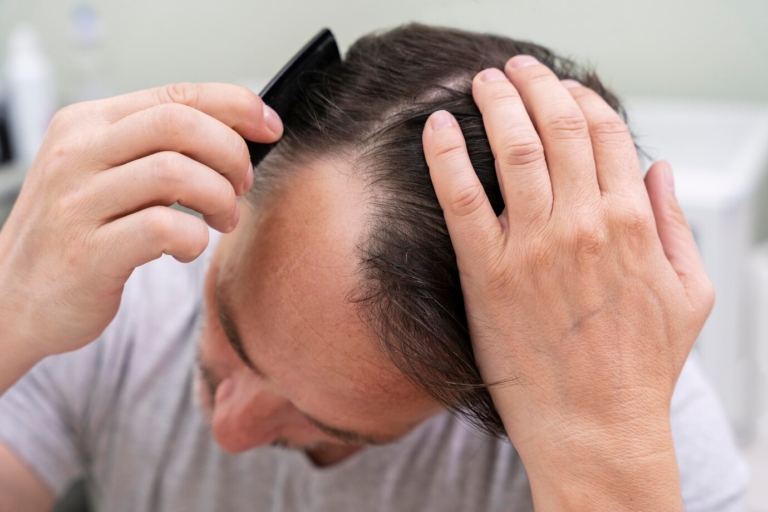
 For Men
Satini For Men — Hair Loss
Male pattern baldness treatment, done properly.
Topical finasteride and minoxidil, together with PRP where appropriate — assessed, prescribed and delivered by a doctor, not a script. We build a plan around your hairline, your budget and how far you want to take it.
☎ 0800 121 622 — Mon–Sat, Ferrymead Christchurch
of men show visible signs of male pattern baldness by age 50 — for some it starts in their early twenties. Earlier treatment generally means more options.
Androgenetic alopecia prevalence, adult menKnow what you're looking at
Recognise the pattern
Male pattern baldness (androgenetic alopecia) follows a predictable path, classified on the Norwood scale. It usually starts at the temples or crown and progresses gradually — it isn't patchy or sudden, which is one way to tell it apart from other causes of hair thinning.
Norwood 1
No visible loss
Hairline is intact. A useful baseline to compare against later.
Norwood 3
Temple recession
The first stage most men actually notice — an "M" shape forming at the hairline.
Norwood 4
Crown thinning begins
Recession continues and a separate thinning patch appears at the crown.
Norwood 5
Hairline meets crown
The band of hair separating the two thinning areas narrows and breaks down.
Norwood 7
Extensive loss
Only a horseshoe band remains at the sides and back.
Not sure where you fit? A doctor can assess your pattern properly. Treatment works best when started early, but useful options may still be available at later stages.
Selected key stages shown. Photographs are AI-generated clinical illustrations, not Satini patients or treatment results. See DermNet NZ for clinical reference images.
The cause
Genetics, hormones, and time
Male pattern baldness isn't caused by anything you did. It's driven by three things working together, which is why treatment targets the hormone directly rather than just the hair.
01 — Genetics
Inherited sensitivity
A family history of hair loss — on either side — makes your follicles more sensitive to DHT. It's the single biggest predictor of whether, and when, you'll notice it.
02 — DHT
A hormone, not damage
Dihydrotestosterone gradually shrinks sensitive follicles until they stop producing visible hair. This is exactly what finasteride is designed to interrupt.
03 — Age
Progressive, not sudden
It typically begins in the 20s or 30s and worsens slowly over years — which is why most men wait too long before asking about treatment.
Treatment options
Two evidence-based paths, one plan built around you
At Satini's doctor-led hair loss clinic in Christchurch, Dr Nadja assesses your hairline, health history and goals at your $99 consultation, then recommends one or both of the following.
Daily · At home
Topical Finasteride & Minoxidil
A daily scalp spray combining finasteride, which blocks the DHT that shrinks your follicles, with minoxidil, which supports blood flow to the follicle. Prescribed and monitored by Dr Nadja.
- Best for
- Early to moderate thinning
- Time to results
- 3–6 months
- Commitment
- No lock-in contract
In-clinic · Course of sessions
PRP (Platelet-Rich Plasma)
Your own blood is drawn, spun to concentrate the platelets, then injected into the scalp to stimulate follicles directly. Read more about PRP for male pattern baldness and how the treatment is performed.
- Best for
- Thinning & early crown loss
- Typical course
- 3–4 sessions, 5–6 weeks apart
- Downtime
- Minimal — some scalp tenderness
Finasteride is a prescription medicine. It has benefits and risks — talk to Dr Nadja about whether it's right for you, possible side effects, and whether it suits your health history. Full consumer medicine information is available from Medsafe. Individual results vary. This page is general information, not medical advice. Read more about the evidence behind topical finasteride.
Real results
See the difference consistent treatment makes
Results build gradually and vary from person to person — but this is the kind of change our male patients see when they stick with a plan.
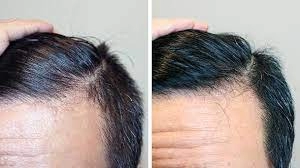
Whether it's a laser cap, topical finasteride and minoxidil, or a course of PRP, the pattern is the same: hair loss slows first, then thickens, then — for most men — visibly regrows over several months of consistent use. Satini's hair-loss products and devices can be viewed online.
Dr Nadja will show you comparable results for the specific treatment she recommends for your stage of hair loss at your consultation.
Who's treating you
Assessed and treated by a doctor — every visit
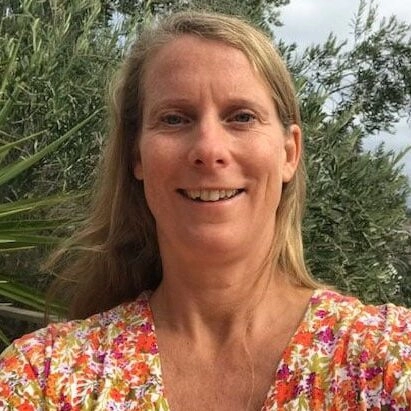
At Satini, Dr Nadja Haub personally assesses, prescribes and delivers every hair loss treatment. There's no separate "injector" handing you off partway through — the person who examines your scalp is the person who treats it.
"Most of my patients don't want people to know they've had anything done — including for their hair. The aim is that nobody can point at what's changed. They just say you look well."
— Dr Nadja Haub, Satini Cosmetic Clinic
What happens next
From first call to a plan you can see working
$99 consultation
Dr Nadja examines your scalp and discusses your history and goals. Refunded in full against any in-clinic treatment you book.
Personalised plan
A written plan and price, matched to your stage on the Norwood scale and your budget.
Treatment
Prescription started and/or your first PRP session booked in — done in clinic, at Ferrymead.
Review & adjust
Progress checked at agreed intervals; the plan is adjusted as your hair responds.
Pricing
Published prices. No hidden consultation fee.
Full breakdown of every treatment we offer is on our clinic pricing page.
No monthly membership fee — you only pay for what you get. Prices current as at publication — confirmed at your consultation. See FAQs ↓
Questions
Male pattern baldness, answered plainly
Is male pattern baldness reversible?
Follicles that have fully closed generally won't regrow hair on their own. But follicles that are shrinking rather than gone can often be slowed or partially reversed with finasteride, minoxidil and PRP — which is why starting earlier gives you more to work with.
At what age does male pattern baldness start?
It can begin as early as your late teens or early twenties, though most men notice it in their late twenties to thirties. By age 50, around half of men show some visible signs.
Does topical finasteride actually work?
For most men with early-to-moderate genetic hair loss, yes — it works by blocking the DHT that shrinks hair follicles. It's a prescription medicine, so Dr Nadja will confirm it's appropriate for you and talk through the benefits and risks at your assessment.
Is PRP painful, and is there any downtime?
Most men describe it as mild discomfort rather than pain — a numbing approach is used beforehand. You can generally return to normal activities the same day, with some scalp tenderness for a day or two.
How soon will I see results?
Topical treatment typically shows visible change from 3–6 months of consistent use. PRP results build gradually over a course of 3–4 sessions across 3–4 months, with maintenance sessions every 6–12 months.
Do I need a prescription, and how much does the consultation cost?
Finasteride is prescription-only in New Zealand, which is why Dr Nadja assesses you first. That consultation is $99, fully refunded against any in-clinic treatment you go ahead with — and there's no obligation to book anything further.
Is there a membership or subscription I have to sign up to?
No. Satini doesn't charge a monthly membership fee for hair loss treatment — you pay for your consultation and whichever treatments you choose, and nothing else.
Book your $99 consultation.
Refunded against any treatment you choose. No pressure, no membership — just a plan for your hairline, from a doctor who'll still be there for your next visit.
Satini For Men — Hair Loss
Male pattern baldness treatment, done properly.
Topical finasteride and minoxidil, together with PRP where appropriate — assessed, prescribed and delivered by a doctor, not a script. We build a plan around your hairline, your budget and how far you want to take it.
☎ 0800 121 622 — Mon–Sat, Ferrymead Christchurch
of men show visible signs of male pattern baldness by age 50 — for some it starts in their early twenties. Earlier treatment generally means more options.
Androgenetic alopecia prevalence, adult menKnow what you're looking at
Recognise the pattern
Male pattern baldness (androgenetic alopecia) follows a predictable path, classified on the Norwood scale. It usually starts at the temples or crown and progresses gradually — it isn't patchy or sudden, which is one way to tell it apart from other causes of hair thinning.
Norwood 1
No visible loss
Hairline is intact. A useful baseline to compare against later.
Norwood 3
Temple recession
The first stage most men actually notice — an "M" shape forming at the hairline.
Norwood 4
Crown thinning begins
Recession continues and a separate thinning patch appears at the crown.
Norwood 5
Hairline meets crown
The band of hair separating the two thinning areas narrows and breaks down.
Norwood 7
Extensive loss
Only a horseshoe band remains at the sides and back.
Not sure where you fit? A doctor can assess your pattern properly. Treatment works best when started early, but useful options may still be available at later stages.
Selected key stages shown. Photographs are AI-generated clinical illustrations, not Satini patients or treatment results. See DermNet NZ for clinical reference images.
The cause
Genetics, hormones, and time
Male pattern baldness isn't caused by anything you did. It's driven by three things working together, which is why treatment targets the hormone directly rather than just the hair.
01 — Genetics
Inherited sensitivity
A family history of hair loss — on either side — makes your follicles more sensitive to DHT. It's the single biggest predictor of whether, and when, you'll notice it.
02 — DHT
A hormone, not damage
Dihydrotestosterone gradually shrinks sensitive follicles until they stop producing visible hair. This is exactly what finasteride is designed to interrupt.
03 — Age
Progressive, not sudden
It typically begins in the 20s or 30s and worsens slowly over years — which is why most men wait too long before asking about treatment.
Treatment options
Two evidence-based paths, one plan built around you
At Satini's doctor-led hair loss clinic in Christchurch, Dr Nadja assesses your hairline, health history and goals at your $99 consultation, then recommends one or both of the following.
Daily · At home
Topical Finasteride & Minoxidil
A daily scalp spray combining finasteride, which blocks the DHT that shrinks your follicles, with minoxidil, which supports blood flow to the follicle. Prescribed and monitored by Dr Nadja.
- Best for
- Early to moderate thinning
- Time to results
- 3–6 months
- Commitment
- No lock-in contract
In-clinic · Course of sessions
PRP (Platelet-Rich Plasma)
Your own blood is drawn, spun to concentrate the platelets, then injected into the scalp to stimulate follicles directly. Read more about PRP for male pattern baldness and how the treatment is performed.
- Best for
- Thinning & early crown loss
- Typical course
- 3–4 sessions, 5–6 weeks apart
- Downtime
- Minimal — some scalp tenderness
Finasteride is a prescription medicine. It has benefits and risks — talk to Dr Nadja about whether it's right for you, possible side effects, and whether it suits your health history. Full consumer medicine information is available from Medsafe. Individual results vary. This page is general information, not medical advice. Read more about the evidence behind topical finasteride.
Real results
See the difference consistent treatment makes
Results build gradually and vary from person to person — but this is the kind of change our male patients see when they stick with a plan.
Whether it's a laser cap, topical finasteride and minoxidil, or a course of PRP, the pattern is the same: hair loss slows first, then thickens, then — for most men — visibly regrows over several months of consistent use. Satini's hair-loss products and devices can be viewed online.
Dr Nadja will show you comparable results for the specific treatment she recommends for your stage of hair loss at your consultation.
Who's treating you
Assessed and treated by a doctor — every visit
At Satini, Dr Nadja Haub personally assesses, prescribes and delivers every hair loss treatment. There's no separate "injector" handing you off partway through — the person who examines your scalp is the person who treats it.
"Most of my patients don't want people to know they've had anything done — including for their hair. The aim is that nobody can point at what's changed. They just say you look well."
— Dr Nadja Haub, Satini Cosmetic Clinic
What happens next
From first call to a plan you can see working
$99 consultation
Dr Nadja examines your scalp and discusses your history and goals. Refunded in full against any in-clinic treatment you book.
Personalised plan
A written plan and price, matched to your stage on the Norwood scale and your budget.
Treatment
Prescription started and/or your first PRP session booked in — done in clinic, at Ferrymead.
Review & adjust
Progress checked at agreed intervals; the plan is adjusted as your hair responds.
Pricing
Published prices. No hidden consultation fee.
Full breakdown of every treatment we offer is on our clinic pricing page.
No monthly membership fee — you only pay for what you get. Prices current as at publication — confirmed at your consultation. See FAQs ↓
Questions
Male pattern baldness, answered plainly
Is male pattern baldness reversible?
Follicles that have fully closed generally won't regrow hair on their own. But follicles that are shrinking rather than gone can often be slowed or partially reversed with finasteride, minoxidil and PRP — which is why starting earlier gives you more to work with.
At what age does male pattern baldness start?
It can begin as early as your late teens or early twenties, though most men notice it in their late twenties to thirties. By age 50, around half of men show some visible signs.
Does topical finasteride actually work?
For most men with early-to-moderate genetic hair loss, yes — it works by blocking the DHT that shrinks hair follicles. It's a prescription medicine, so Dr Nadja will confirm it's appropriate for you and talk through the benefits and risks at your assessment.
Is PRP painful, and is there any downtime?
Most men describe it as mild discomfort rather than pain — a numbing approach is used beforehand. You can generally return to normal activities the same day, with some scalp tenderness for a day or two.
How soon will I see results?
Topical treatment typically shows visible change from 3–6 months of consistent use. PRP results build gradually over a course of 3–4 sessions across 3–4 months, with maintenance sessions every 6–12 months.
Do I need a prescription, and how much does the consultation cost?
Finasteride is prescription-only in New Zealand, which is why Dr Nadja assesses you first. That consultation is $99, fully refunded against any in-clinic treatment you go ahead with — and there's no obligation to book anything further.
Is there a membership or subscription I have to sign up to?
No. Satini doesn't charge a monthly membership fee for hair loss treatment — you pay for your consultation and whichever treatments you choose, and nothing else.
Book your $99 consultation.
Refunded against any treatment you choose. No pressure, no membership — just a plan for your hairline, from a doctor who'll still be there for your next visit.