Glutathione Injections in NZ: Do They Really Whiten Your Skin?
Glutathione has become one of the most talked-about ingredients in skin brightening — taken as infusions, injections, oral supplements and creams to fade pigmentation and even out skin tone. But does it actually work, and is it safe? This guide gives you an honest, up-to-date answer based on the most recent medical research, and explains how we approach glutathione infusions responsibly at Satini Cosmetic Clinic in Christchurch.
What is glutathione?
Glutathione is a small protein (a tripeptide of glutamine, cysteine and glycine) that your body makes naturally. It’s often called the body’s “master antioxidant” because it protects cells from oxidative stress — the cell damage caused by free radicals that’s linked to ageing. It’s not a vitamin, and healthy bodies produce their own supply.
How could glutathione affect skin colour?
Skin colour comes largely from melanin, produced by an enzyme called tyrosinase. Research suggests glutathione influences pigmentation in a few ways:
What does the latest research actually say? (2024–2026)
Several systematic reviews published recently have taken a careful look. The overall picture is cautiously positive but far from settled.
Oral glutathione
This has some of the better-quality evidence. A randomised, placebo-controlled trial (Weschawalit et al., 2017) found oral glutathione (250 mg/day) reduced the skin’s melanin index within weeks. The 2024–2025 systematic review by Sarkar and colleagues (International Journal of Dermatology) concluded oral glutathione is moderately effective across the whole body — but that the effect tends to fade once you stop. A 2025 narrative review (Alzahrani et al., Cureus) reached a similar conclusion.
Topical glutathione
Creams and serums (typically 0.5%, which outperformed 0.1% and placebo) can improve brightness and reduce localised pigmentation with minimal side effects. A 2025 systematic review in the Journal of Clinical and Aesthetic Dermatology found topical glutathione promising but still under-researched; pairing it with microneedling appears to help.
Intravenous (IV) infusions — the honest picture
IV glutathione is the most popular form in clinics and on social media, but it has the weakest high-quality evidence for skin whitening. There are no large, robust randomised trials showing durable whitening from infusions, and reviewers consistently call for better studies (JCAD, 2025; Gupta, 2025). A 2026 PRISMA review of 194 studies (Molecules) again found the most favourable data for oral and topical forms.
Bottom line: glutathione has genuine potential as a skin-brightening agent, but effects are usually modest, often temporary, and best supported for oral/topical use. Larger, well-designed trials are still needed for infusions.
Beyond skin brightening: other reported benefits
Because glutathione is your body’s main antioxidant, people often ask about its wider effects. The evidence here is mixed and mostly preliminary, but the areas most commonly discussed are:
- Skin quality — by helping neutralise free radicals, glutathione is associated with a brighter, healthier-looking complexion, and is being studied for effects on skin texture and collagen support.
- Energy and wellbeing — some people report feeling more energetic in the days after an infusion. This is anecdotal rather than proven, and responses vary from person to person.
- Immune and antioxidant support — glutathione plays a role in normal immune function, and a few small studies have explored antioxidant benefits — though it is not a treatment for any specific illness.
These are general observations, not guaranteed outcomes — we’ll always give you a realistic picture at your consultation.
Who may have lower glutathione levels?
Glutathione can be depleted by ongoing inflammation and oxidative stress. Levels have been reported to be lower in people with conditions such as chronic fatigue syndrome, fibromyalgia, Parkinson’s disease, HIV, cystic fibrosis and inflammatory bowel disease, as well as with significant exposure to toxins. This is background information only — glutathione infusions are not a treatment for these conditions, and any medical concern should be discussed with your GP or specialist.
Is glutathione infusion safe?
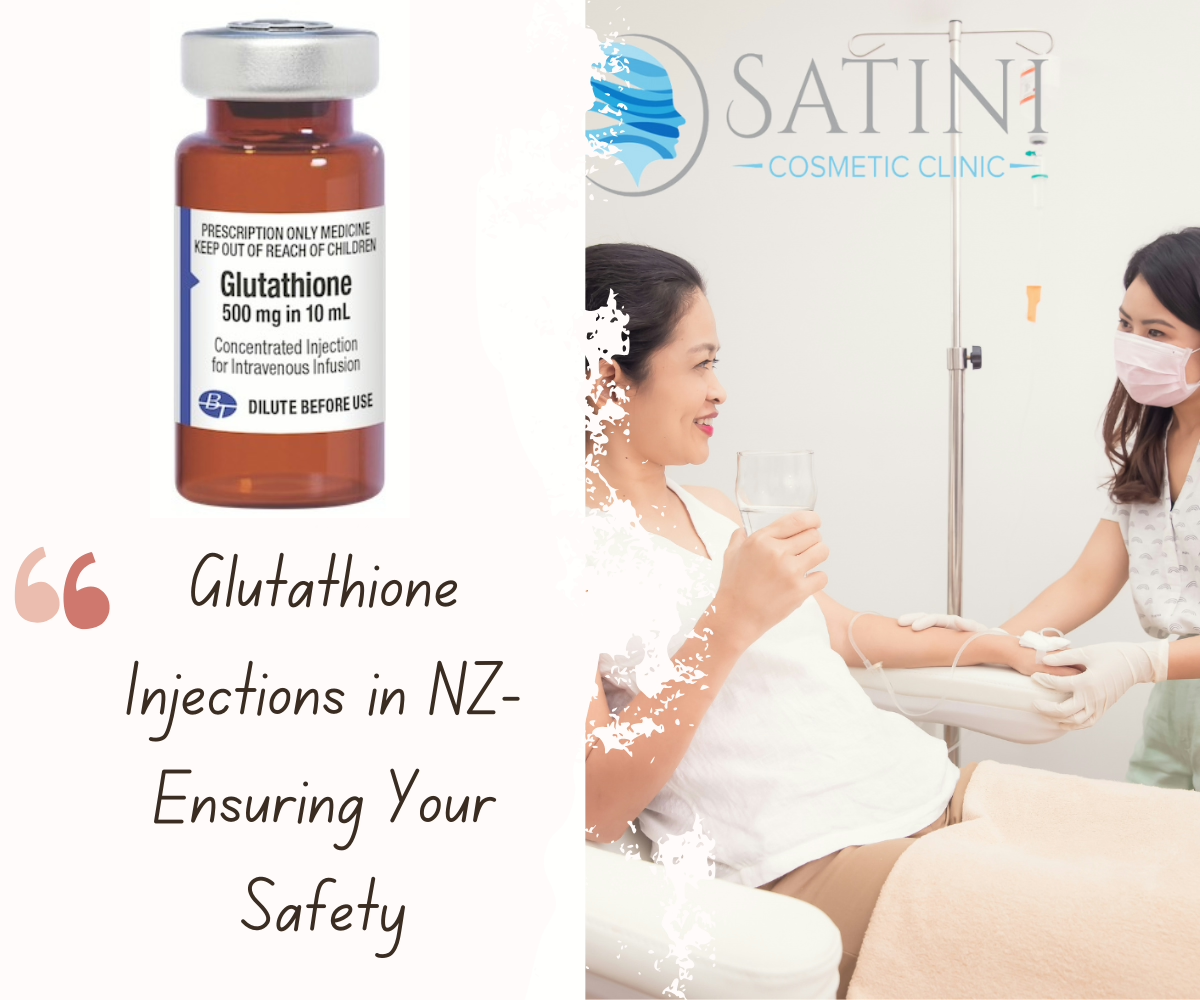
For most healthy people, a properly screened, professionally administered infusion of a high-quality product is generally well tolerated. However, IV use is treated cautiously for good reason:
- Reviews have linked IV glutathione (used off-label for whitening) with potential kidney and thyroid effects and, rarely, serious skin reactions.
- The Philippine FDA advised against unsafe IV glutathione for skin lightening (2019); the US FDA warned compounders about certain glutathione sources (2023).
- Product quality is critical. Cases of illness overseas were linked to pharmacy-compounded product rather than GMP-manufactured glutathione. Reputable clinics use GMP product.
- Rebound pigmentation can occur after stopping, and long-term effects of repeated use aren’t fully known.
Is glutathione approved in New Zealand?
Glutathione injections are not approved by Medsafe. They may be given by a doctor as an unapproved medicine under Section 29 of the Medicines Act, which requires the prescriber to notify the Ministry of Health. In practice, that means it should only be provided by a suitably qualified clinician, after a proper assessment, using a GMP-manufactured product.
For context, glutathione injections are approved in some countries for specific medical uses — for example certain liver conditions in India, and to help manage chemotherapy side effects in the Philippines — but not for skin whitening.
How we approach glutathione infusions at Satini
- Free initial consultation & medical history — we discuss your goals, screen for anything unsuitable, and set realistic expectations.
- Blood tests before treatment — we check kidney and liver function and electrolytes. The blood test typically costs about NZD $120–$150.
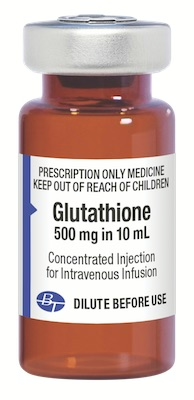
- GMP-manufactured product — produced to strict quality standards (manufactured in Australia by Biological Therapies).
- A tailored plan — dosing and number of sessions are individualised, always alongside diligent sun protection.
How many infusions will I need, and how long do results last?
Because this is still an experimental treatment, there’s no official protocol. In practice, skin-brightening regimens described in the literature often use around 500 mg–1 g once or twice weekly over roughly 6–12 weeks, and some people notice a change after just a few sessions. Deeper or darker skin tones typically need more sessions, and very high doses aren’t necessarily better — the body’s cells can only take up so much glutathione at a time.
Any brightening effect is usually temporary. Studies suggest skin tends to drift back toward its baseline within about six months, so results are best maintained with diligent daily SPF 50+ and, where suitable, oral glutathione support. Rather than committing you to a fixed number of sessions, we individualise your plan and reassess as we go.
Preparing for your infusion
- Have your pre-treatment blood test so we can confirm your kidneys and liver are healthy.
- Tell us about any medications — for example, if you take blood thinners, we may give you specific advice beforehand.
- It’s sensible to avoid alcohol and smoking around your treatment, as these add to oxidative stress.
- No special diet or fasting is required.
Getting the most from treatment (and keeping results)
- Daily SPF 50+ is essential — UV exposure is the main reason pigmentation returns.
- Oral glutathione or an NRF2 activator may help support and prolong results.
- A pigmentation-focused skincare routine (vitamin C, niacinamide) supports overall tone.
Can you combine glutathione with other nutrients?
Glutathione is sometimes given alongside other antioxidants as part of an IV infusion. Common additions include:
- Vitamin C — supports collagen and overall skin health, and is often paired with glutathione for brightening (though evidence that it lightens skin on its own is limited).
- Alpha-lipoic acid (ALA) — another antioxidant sometimes combined for general skin and wellbeing support.
- Vitamin B complex — B1, B2, B3, B5, B6, B7, B9 and B12 to support energy and general health.
Whether a combination is appropriate depends on your goals and health — we’ll advise what makes sense for you at your consultation.
Alternatives worth considering
- Oral glutathione / NRF2 activators — the best-evidenced glutathione route.
- Topical glutathione and vitamin C — gradual, localised brightening.
- Prescription pigment treatments — e.g. hydroquinone (doctor-prescribed only in NZ), kojic acid, alpha-arbutin.
- Chemical peels and Cosmelan/Dermamelan — especially for melasma and dark spots.
Frequently asked questions

Considering glutathione for brighter, more even-toned skin?
Book a proper assessment with Dr Nadja Haub in Ferrymead, Christchurch. Your initial skin assessment is free.
Call 0800 121 622References (selected)
- Sarkar R, et al. Glutathione as a skin-lightening agent and in melasma: a systematic review. Int J Dermatol. 2025;64:992–1004.
- Alzahrani TF, et al. Safety and efficacy of glutathione supplementation for skin lightening: a narrative review. Cureus. 2025;17(1):e78045.
- Khanna R, Rambhia P, Chapas A. Systematic review of topical glutathione in dermatology. J Clin Aesthet Dermatol. 2025;18(9):51–54.
- Glutathione in skin aging and tissue regeneration: a PRISMA systematic review (194 studies). Molecules. 2026;31(6):981.
- Gupta S. Glutathione in dermatology: a bright future or fading hype? CosmoDerma. 2025;5:51.
- Weschawalit S, et al. Effects of oral glutathione on skin appearances: RCT. J Am Acad Dermatol. 2017;77:667–673.
- Philippine FDA Advisory No. 2019-182: Unsafe use of glutathione as a skin-lightening agent.
This article is general information, not individual medical advice. Glutathione injections are an unapproved medicine in New Zealand and are provided only after medical assessment. Please book a consultation to discuss what is appropriate for you.