What is MINT Thread Facelift and How Does It Work? New Zealand Guide 2026
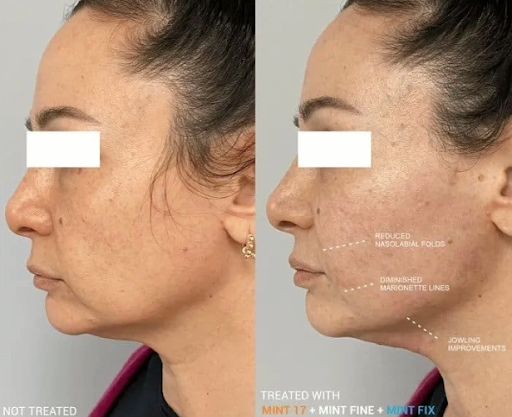
MINT threads are dissolvable surgical sutures placed under the skin to create a subtle lifting effect and support skin quality over time. They’re generally used for mild to moderate facial sagging, with common treatment areas including the jawline, folds between the nose and lips, and the brow area. The approach is less invasive than a surgical facelift, works in more superficial layers, and isn’t a replacement for surgery when laxity is more advanced.
What to expect is covered in this guide, from consultation and comfort measures (numbing cream and local anaesthetic) through to downtime and aftercare, including the likelihood of swelling or bruising and why anti-inflammatories are often avoided due to bruising risk. Longevity is discussed in realistic terms, with a typical guide of around one year for many people and study figures used as context rather than guarantees. Potential risks are outlined, including temporary puckering or dimpling, the possibility of feeling threads in thinner skin, rare infection, and very rare visibility or protrusion that may require removal.
What Is MINT Thread Facelift and How Does It Work?
If you’ve been seeing thread lifting mentioned online and wondering what it actually involves, this guide breaks it down in plain terms. When people ask, what is MINT thread facelift and how does it work, they’re usually asking two things: what the threads are, and what changes they can realistically create. MINT threads are dissolvable surgical sutures placed under the skin to create a lifting effect and support skin quality over time. They’re used to address mild to moderate sagging, focusing on subtle, natural-looking improvement rather than a dramatic change.
What Makes MINT Threads Different From Surgery?
A thread lift can be appealing when we want visible improvement without the commitment of an operation. It’s still a medical procedure, but it’s less invasive than a surgical facelift and works in more superficial layers. That difference matters because it helps explain why a thread lift isn’t a replacement for surgery in cases of significant laxity. With a facelift, deeper structures can be tightened. With threads, we’re working closer to the surface, aiming to lift and support rather than fully reposition deeper tissues. For many people, that trade-off is exactly the point.
Who Is a Good Candidate for MINT Threads in New Zealand?
The best candidates are usually people with mild to moderate sagging who want a refreshed look without surgery. Sagging can start from around the mid-30s, but suitability isn’t only about age. Skin thickness, facial structure, and the type of movement in the area all influence whether threads are likely to be helpful.
If there’s more advanced laxity, surgery may be the more appropriate option. For those exploring a non surgical facelift with MINT threads in Christchurch, it’s worth treating the phrase as a category rather than a promise. The goal is a measured lift, not a surgical-level change.
What Areas Can Be Treated With a Thread Lift?
Thread lifting is commonly used to improve definition and soften the look of sagging in specific zones. Areas often treated include the jawline, the folds between the nose and lips, and the brow area, depending on facial anatomy and goals. Some people also ask about lip contour enhancement, which can be approached carefully when it suits the structure. Mono threads are a separate thread type used when tightening is the priority rather than lifting. When the conversation turns to MINT threads for acne scars and skin tightening, it’s important to be precise about expectations. Threads may support skin quality, but outcomes vary by scar type and skin condition.
How Do MINT Threads Create Lift and Support Over Time?
Threads have evolved over time. Earlier versions were mainly used to support collagen, while later designs introduced barbs that can help lift tissue upward. This is one reason people keep asking, “what is MINT thread facelift and how does it work?”, because the mechanism isn’t just “one thing”. There can be an immediate lifting effect from the way the threads sit under the skin, and longer-term support as the material dissolves. MINT threads are noted as FDA-approved in 2020. When asked how long does MINT thread lift last?, a common guide is around a year for many people, with individual variation.
What Happens During a MINT Thread Lift Appointment?
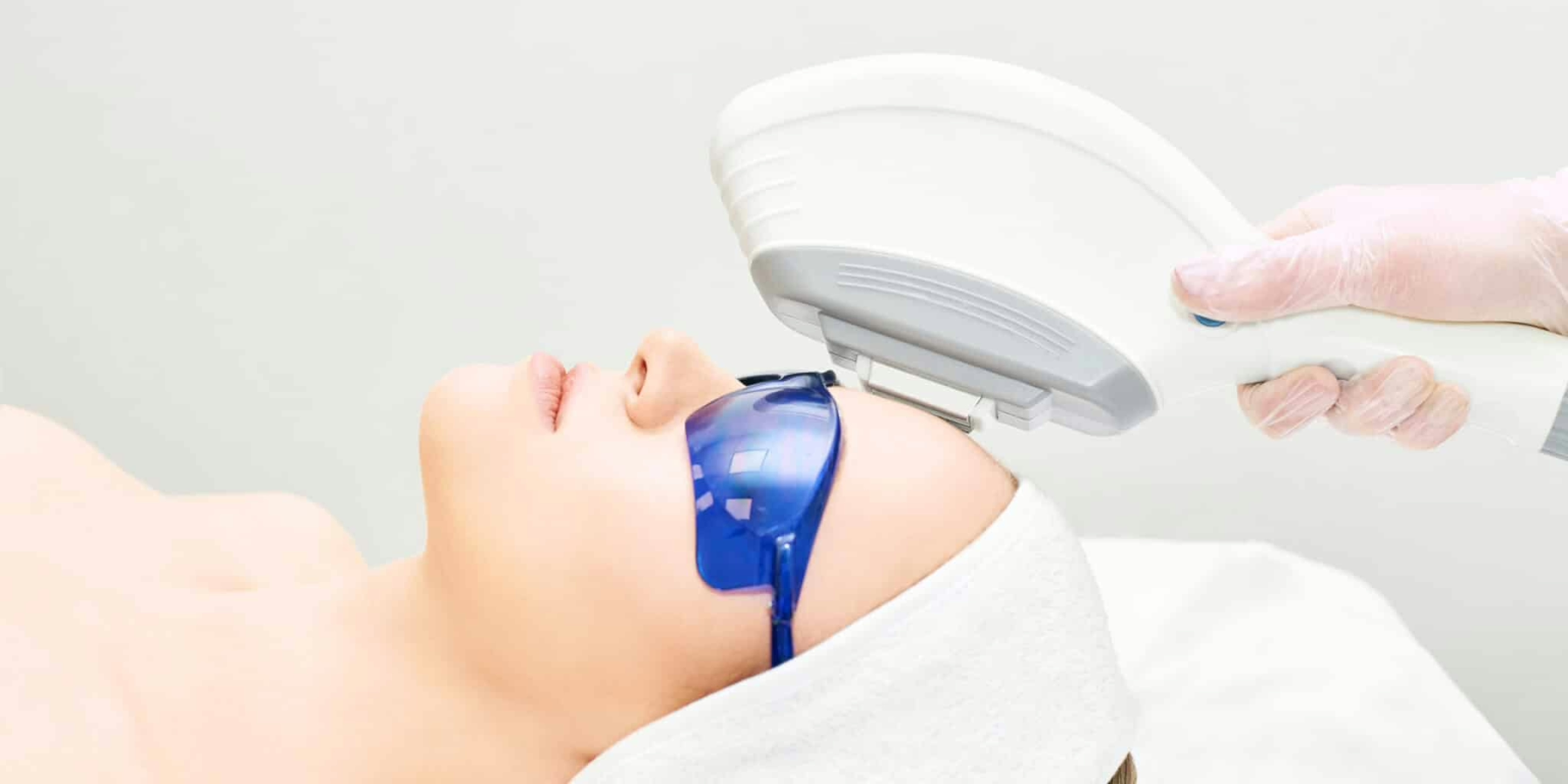
A thread lift appointment is typically planned with comfort, precision, and safety in mind. Numbing cream and local anaesthetic are used, and while the aim is for the process to feel pain-free, some pulling or stinging may occur. A pain scale around 2–3 out of 10 is often used to describe it, but everyone experiences sensation differently. The threads are placed under the skin, and the tissue is adjusted to achieve the intended lift.
For those considering a non-surgical facelift with MINT threads in Christchurch, it helps to think in terms of a tailored plan rather than a one-size approach. If you’re still asking, “what is MINT thread facelift and how does it work?”, you’ll find the “how” is largely about placement and technique.
What to Expect After Treatment: Downtime and Aftercare
Downtime depends on the type of threads used and the areas treated. With lifting threads, we may need a few hours of rest afterwards, and it’s normal to have swelling or discomfort in the early period. Ice packs can help, and paracetamol is generally preferred for pain relief. Anti-inflammatories are usually avoided because they can increase the risk of bruising. With mono threads, many people return to normal daily activities straight away, but it’s still common to avoid strenuous exercise for 24 hours.
In asking, “how long does MINT thread lift last?”, you’ll see that aftercare matters because early healing can influence how settled and even the results look as swelling resolves.
How Long Does MINT Thread Lift Last?
Longevity is one of the most common questions, and it’s also where we need to be careful with certainty. When people ask, “how long does MINT thread lift last?”, a practical estimate is that it lasts about one year for most people, though this varies. There are also study figures that can help frame expectations: an initial lift of around 6–10 mm, still around 3–6 mm at one year, and around one third of people still noticing an effect at two years. These numbers are useful context, not a guarantee. Skin quality, lifestyle, and the degree of laxity all influence how long the improvement remains noticeable. If you’re also considering MINT threads for acne scars and skin tightening, the timeline can differ depending on what you’re targeting.
Non Surgical Facelift With MINT Threads Christchurch
If you’re searching for a non surgical facelift with MINT threads in Christchurch, it’s worth keeping the wording grounded. A thread lift can create lift and definition, but it isn’t the same as a facelift and it doesn’t tighten deeper ligaments. It can be a good option for mild to moderate sagging, especially when you want a discreet, natural change. Risks should be understood up front. Puckering or dimpling can occur in up to 20% of cases and often settles within 1–3 weeks. Massage along the threads may be recommended, and heat can sometimes help. Infection is rare but possible, and very rarely a thread can become visible or protrude, requiring removal.
If you’re also looking at MINT threads for acne scars and skin tightening, we’ll keep claims cautious and personalised. In a calm, doctor-led setting, we can talk through your goals and decide whether threads are the right fit for your face and timeline.
To explore your options, book a discreet consultation with Satini and map out a plan that suits your goals.